

The Hierarchy of Drain-Clearing Approaches
A clogged drain is one of the most common household plumbing problems and one of the most poorly addressed — not because the solutions are complicated, but because most homeowners reach for the least effective method first (chemical drain cleaners) rather than the most effective one (mechanical clearing at the clog’s location). Understanding why different methods work, in what situations, and in what order of effectiveness prevents the wasted time and money of trying ineffective approaches before the one that works.
The ranking that follows reflects both effectiveness for typical residential drain clogs and the trade-offs of each approach.
Rank 1: The Drain Snake at the Clog Location
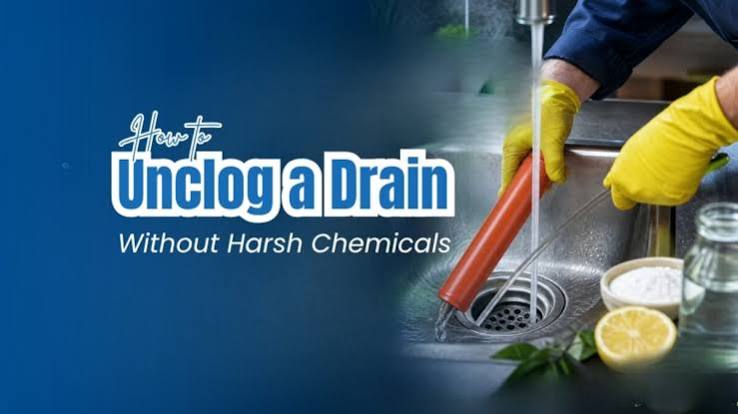
A hand drain snake (a flexible cable with a corkscrew or cutting tip at one end, a handle at the other) inserted directly into the drain and worked through the trap into the drain line is the most effective method for the majority of bathroom and kitchen drain clogs. The cable physically breaks through or retrieves the clog material — hair, grease accumulation, soap scum — rather than trying to dissolve it from a distance.
A basic hand snake (20–25 feet) handles the vast majority of residential drain clogs at a one-time cost of $25–$40. Insert the snake through the drain opening, advance it while rotating, feel the resistance of the clog, work through or past it, and withdraw. Repeat until the drain runs freely. This is faster, safer, and more effective than any chemical or pressure method for the typical residential drain blockage.
Rank 2: P-Trap Cleaning (For Sink Drains)
For sink drain clogs (bathroom, kitchen, or utility), removing and cleaning the P-trap (the curved pipe directly under the sink) physically removes the accumulation in the section of pipe most likely to harbor the clog. This takes 5–10 minutes, requires no tools beyond a bucket (to catch the water in the trap when opened), and succeeds for most sink drain problems.
Place a bucket under the P-trap, unscrew the slip-joint fittings at each end of the curved section, remove the trap, clean it of any accumulation, and reinstall. If this doesn’t clear the problem, the clog is downstream of the P-trap, requiring the drain snake to reach further.
Rank 3: Enzyme-Based Drain Cleaners (For Maintenance)
Enzyme-based drain cleaners (biological products containing bacterial cultures that digest organic drain accumulation) work slowly but effectively for maintenance — keeping drains clear that are prone to sluggishness without fully clogging. They’re not effective for clearing an existing complete blockage because they require hours or days to work and a drain with standing water doesn’t allow the enzyme product to reach the clog effectively.
Used monthly in drains prone to hair or grease buildup, enzyme cleaners are the gentlest and most pipe-safe approach to preventive drain maintenance. They don’t harm pipes, rubber seals, or septic systems, and they address the organic accumulation that eventually creates blockages before it becomes a problem.
Rank 4: Chemical Drain Cleaners (With Reservations)
Chemical drain cleaners (sodium hydroxide or sulfuric acid-based products) dissolve organic blockages through chemical reaction. They work for hair and soap-based clogs if the blockage is mild enough for the chemical to reach it and dissolve it within its working time. They don’t work for physical blockages (foreign objects, heavy grease accumulation), tree roots, or clogs far down the drain line.
The trade-offs: heat generated by the chemical reaction can soften PVC pipes and damage rubber seals. Repeated use degrades pipes over time. They’re ineffective for standing water situations (the chemical dilutes before it reaches the clog). For a partial blockage where water drains slowly but completely, a chemical cleaner may work. For a complete blockage with standing water, the snake is the right tool.