

The Technology That Quietly Got Much Better
The garage door opener is a piece of technology most homeowners install and then forget about for 10–15 years. During that period, the technology has advanced significantly: belt drive systems replaced chain drives as the standard for quiet operation, DC motors replaced AC motors for smoother speed control, battery backup systems became available for power outage scenarios, and smart connectivity transformed the opener from a single-purpose remote-controlled device into an integrated part of the home’s access management.
An opener that’s approaching end of life — or one that’s simply old and loud — represents an upgrade opportunity worth evaluating deliberately rather than replacing with an equivalent unit.
Drive Type: The Noise Difference That Matters
Chain drive openers are the most affordable and most common residential openers. They’re reliable and durable. They’re also noticeably noisy — the chain’s mechanical noise and vibration transmits through the opener unit and into the garage structure, which in an attached garage means the noise is audible in adjacent living spaces. For a detached garage, chain drive noise is a non-issue. For an attached garage where a bedroom is above or adjacent to the garage, chain drive noise is a daily quality-of-life factor.
Belt drive openers replace the metal chain with a reinforced rubber belt that operates nearly silently. The belt drive system costs $50–$150 more than a comparable chain drive and eliminates the primary complaint about chain drive openers in attached garages. Screw drive systems (a single threaded steel rod) are quiet and require less maintenance but are slower than belt or chain drives.
Battery Backup: The Feature That Pays Off Immediately
Standard garage door openers require AC power to operate. When a storm knocks out power — frequently the precise conditions when you most need to leave or enter the garage — the opener is inoperable, requiring manual release and hand operation of a heavy door.
Battery backup garage door openers include an internal battery that maintains opener function for 20–50 cycles after power loss, depending on battery capacity and door weight. This feature pays off in the first power outage and eliminates the manual operation inconvenience that power failures have always created. It’s the most underrated feature in modern openers and worth specifically requesting when replacing a unit.
Smart Connectivity: The Genuine Use Cases
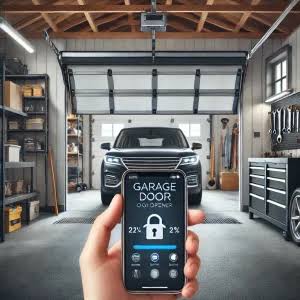
Smart garage door openers connect to WiFi and allow smartphone control and monitoring. The genuine use cases that most users actually value: closing the garage door remotely after accidentally leaving it open (the ‘I drove away and wasn’t sure if I closed it’ anxiety is eliminated), receiving notifications when the door opens or closes (useful for knowing when family members arrive home), and integrating with smart home platforms to create automations (automatically turn on garage lights when the door opens at night).
Less genuinely valued in practice: opening the door remotely (you’re usually present when you want the door open), integration with voice assistants for door control (voice control of garage doors creates security and accidental-opening concerns that reduce confidence in the feature), and scheduled operations (garage doors aren’t typically scheduled the way lights or thermostats are).
Installation: Professional vs. DIY
Garage door opener replacement is a manageable DIY project for mechanically confident homeowners with a few hours available. The opener comes with detailed installation instructions; the process involves disconnecting the old unit, installing the new mounting bracket, hanging the new unit on the existing rail or installing a new rail, connecting the drive component to the door trolley, and programming remotes and keypad.
The areas where DIY replacement creates risk: incorrect spring tension identification (if the door has a broken or near-failed spring, opener replacement makes it visible — the installer faces a hazardous spring situation), electrical connection to the existing wiring (generally straightforward if the wiring is in good condition), and calibration of the auto-reverse force and travel limits (too much force on auto-reverse is a safety issue; incorrect travel limits cause door damage). Professional installation ($100–$200) provides completed calibration and typically a one-year installation warranty.