
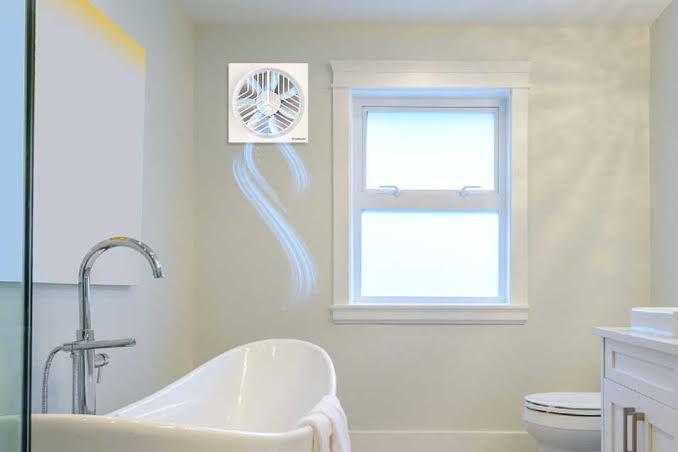

The Fan That’s There But Isn’t Working
Most homes have a bathroom exhaust fan. Most bathroom exhaust fans don’t perform adequately — they’re undersized for the room, installed in the wrong position, ducted through inadequate runs, or simply not used long enough after showering to actually remove the moisture load a shower produces. The visible result is persistent mold in grout corners, peeling paint above the shower, and a bathroom that smells damp even after a full day of drying.
A bathroom exhaust fan that’s working correctly changes the room’s moisture behavior completely. Understanding what ‘working correctly’ means — in terms of sizing, installation, and run time — helps diagnose whether your current fan is adequate or whether the moisture problems you’re experiencing have a fixable cause.
CFM Sizing: The Number That Determines Everything
Exhaust fan capacity is rated in CFM (cubic feet per minute of air moved). The standard sizing rule is one CFM per square foot of bathroom floor area, with add-ons for specific fixtures: +50 CFM for a toilet compartment, +50 CFM for a jetted tub or large soaking tub, +50 CFM for a separate shower stall.
A 100-square-foot master bathroom with a separate toilet compartment and a large shower needs approximately 200 CFM of exhaust capacity. Most builder-installed bathroom fans are rated for 50–80 CFM — adequate for a small guest bathroom and completely inadequate for a large master bath. This sizing mismatch is the cause of moisture problems in more bathrooms than any other single factor.
Fan Placement: Where It Goes Changes What It Does
An exhaust fan positioned directly above a shower or tub captures steam at its source — the point of highest concentration — before it disperses throughout the bathroom. A fan positioned over the toilet or in the center of a large bathroom has to pull steam the full width of the bathroom before it can capture it, which allows most of it to condense on cooler surfaces before it reaches the fan.
In master bathrooms with separate shower and toilet compartments, two fans (or one high-capacity unit in the shower compartment and one in the main area) provide better coverage than one centrally located fan. Building codes require exhaust fans in bathrooms without operable exterior windows; in bathrooms with windows, a fan is optional but nearly always worthwhile.
Duct Runs: Where Moisture Goes After the Fan
The exhaust duct must terminate at the building exterior — not into the attic, not into the soffit, and not into any interior space. A bathroom fan exhausted into the attic deposits moisture directly into the attic space, where it promotes mold growth on sheathing and rafters and can cause structural deterioration. This is more common than most homeowners realize — many older installations dumped exhaust into the attic, and some renovation work inadvertently disconnects duct runs from exterior terminations.
The duct should be as short and straight as possible, with minimal bends. Every elbow (90-degree turn) in the duct run reduces effective airflow equivalent to several feet of straight duct. A fan rated for 110 CFM installed with a 20-foot duct run with three elbows may deliver 70 CFM at the source — significantly less than its rating.
The Timer Switch: The Simple Fix for Inadequate Run Time
The average shower produces a substantial moisture load that takes 15–25 minutes of continuous exhaust ventilation to remove from a standard bathroom. The typical fan operation: turned on when the shower starts, turned off when the person leaves the bathroom — often 5–10 minutes total. The moisture load that wasn’t exhausted condenses on surfaces and contributes to the chronic dampness that homeowners attribute to ‘bathroom moisture problems.’
A timer switch or humidity-sensing switch (which turns the fan on when humidity rises and off when it returns to baseline) costs $25–$60 and ensures adequate run time without relying on behavioral change. The humidity-sensing switch is the most effective option — it responds to actual moisture levels rather than a fixed timer, running longer after long showers and shorter after brief ones. This single switch replacement resolves moisture problems in many bathrooms where the fan itself is adequately sized.