
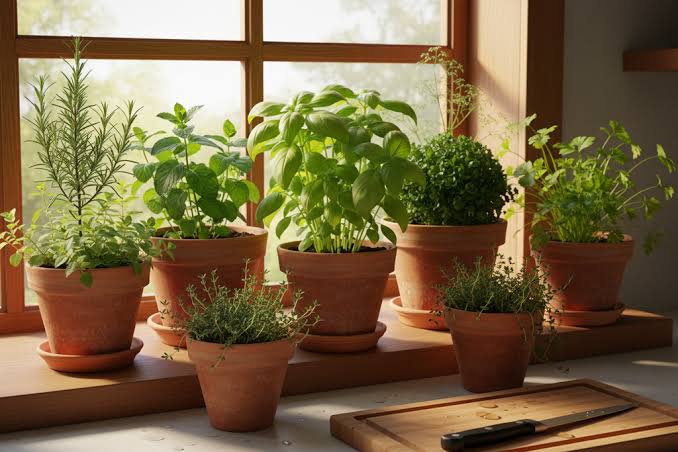

The Kitchen Garden With the Highest Daily Return
Fresh herbs transform cooking more than almost any other ingredient, and the gap between fresh herbs and dried herbs is large enough to be worth pursuing in any space — a windowsill, a balcony, a small raised bed. A fresh sprig of basil in a pasta sauce, fresh thyme pulled from a pot while roasting a chicken, a handful of cilantro on tacos — these flavors are qualitatively different from their dried equivalents.
The herbs that matter most for daily cooking are a short list, and most can be grown successfully with modest effort once their specific requirements are understood. What kills herbs is usually not complexity — it’s specific, avoidable mistakes for each species.
Basil: The Heat-Lover That Hates Wet Feet
Basil is the herb most often grown and most often killed prematurely. Its requirements: full sun (at minimum 6 hours of direct sun daily — no substitutes), warm temperatures (below 50°F causes chilling injury and the characteristic blackening of leaves), and well-drained soil that dries out between waterings. The most common basil killer in container growing is overwatering — basil roots rot quickly in consistently damp conditions.
Pinch flower buds as soon as they appear to extend the harvest season by weeks. Once a basil plant flowers and sets seed, it puts all its energy into seed production and leaf quality declines rapidly. Regular pinching maintains the plant in vegetative production mode.
Rosemary and Thyme: The Mediterranean Drought-Tolerant Herbs
Rosemary and thyme come from the same Mediterranean climate origin — hot, dry summers and mild winters. They thrive with neglect that would kill most other herbs. Both require excellent drainage above all else; they tolerate drought better than any brief waterlogging. In containers, use a gritty, fast-draining mix (add perlite to standard potting mix). In ground beds, plant in a raised, well-amended area if your soil is clay.
Both are perennial in USDA zones 7 and above, meaning a single plant comes back each year and grows into a substantial specimen over time. In colder climates, treat them as annuals or bring containers indoors for winter.
Mint: The Herb That Needs Its Own Space
Mint is the most vigorous herb most gardeners will encounter — it spreads by underground runners that can colonize an entire garden bed in a single season. The solution is simple and effective: grow mint only in containers, or plant it in the ground inside a container (bury a large pot without drainage holes to contain the runners while allowing the plant to access ground moisture).
Within this containment, mint is nearly impossible to kill. It tolerates lower light, more water, and cooler temperatures than most other culinary herbs. A single mint plant produces an abundance of leaves throughout the growing season and comes back reliably the following spring.
Cilantro and Parsley: Cool Season Success
Cilantro is a cool-season herb that bolts (goes to flower and seed) rapidly in heat. In warm climates, successful cilantro growing means succession planting — sowing a small amount of seed every 3–4 weeks from early spring through early summer, and again in fall. No individual planting lasts more than 4–6 weeks in warm weather before bolting, but regular succession plantings provide continuous harvest.
Parsley is biennial but most often grown as an annual. It’s slower to establish than cilantro (germination can take 3–4 weeks), tolerates both heat and cold better than cilantro, and produces usable leaves for a full growing season. Starting parsley from transplants rather than seed eliminates the slow germination frustration and provides harvestable leaves within weeks of planting.